theoldandcurious
Carnivorous Drosera Capensis Alba Sundew
Carnivorous Drosera Capensis Alba Sundew
Couldn't load pickup availability
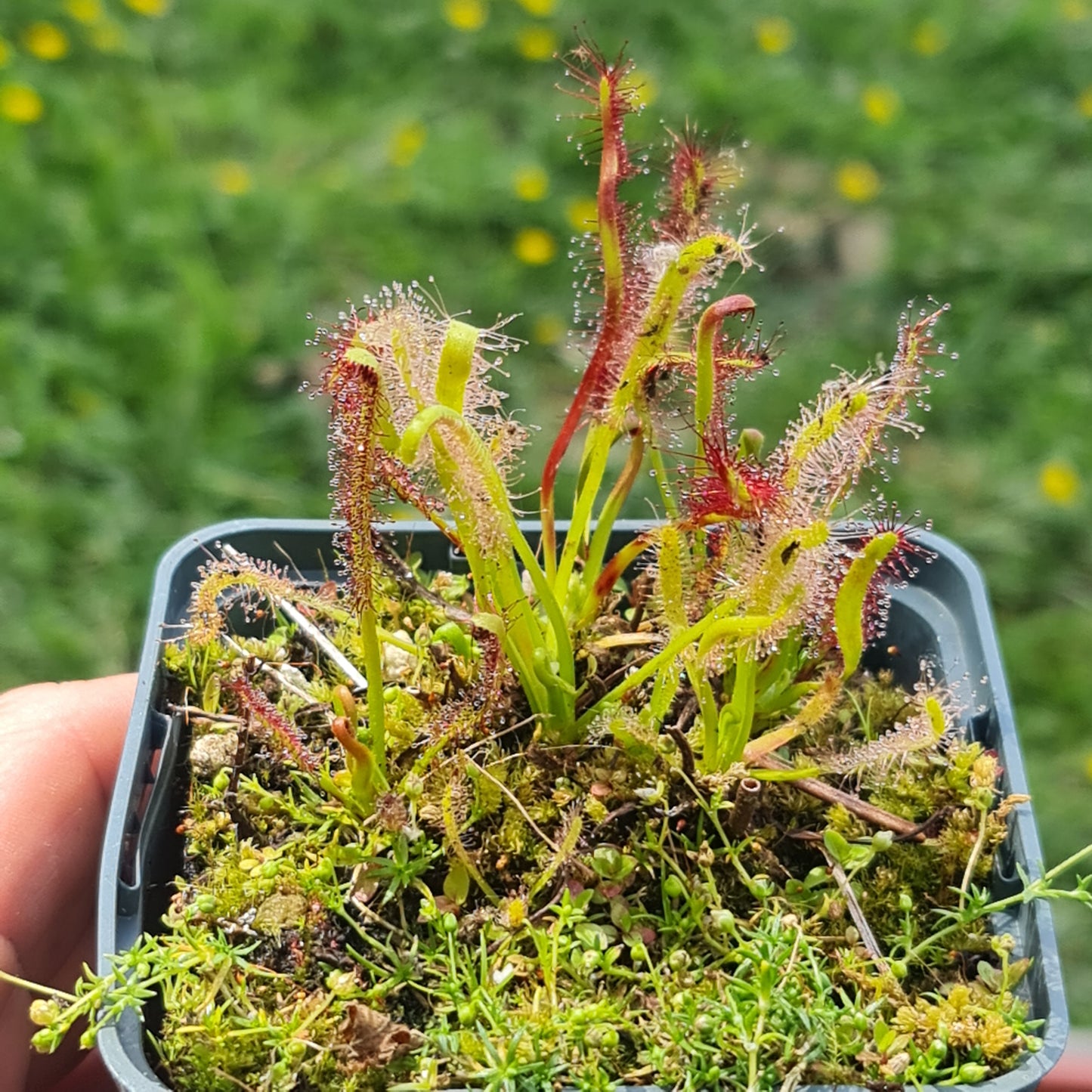
Drosera capensis ‘Alba’ – Cape Sundew
An elegant and easy-to-grow carnivorous plant producing long, narrow leaves covered in glistening droplets that attract, capture and digest small insect prey.
Drosera capensis ‘Alba’, commonly known as the White Cape Sundew, is a distinctive pale form of the popular Cape Sundew from South Africa.
Unlike the typical form of Drosera capensis, which develops red pigmentation in strong light, ‘Alba’ remains predominantly fresh green, with pale or translucent tentacles and clear, sparkling droplets of sticky mucilage.
Its combination of bright green foliage and jewel-like droplets gives the plant a wonderfully fresh appearance and makes it an attractive contrast alongside redder forms of Drosera.
How It Catches Insects
The long leaves are covered with hundreds of specialised tentacles, each tipped with a glistening droplet of sticky mucilage.
These droplets resemble dew and help attract small insects. When prey lands on the leaf it becomes trapped, and surrounding tentacles gradually move towards it.
The leaf itself can also slowly curl around captured prey, increasing contact with the digestive surface. The plant then releases enzymes that allow it to absorb nutrients from the insect.
Watching this process makes Drosera capensis one of the most fascinating carnivorous plants to grow.
Colour & Growth
Drosera capensis ‘Alba’ forms a gradually lengthening rosette of long, narrow green leaves.
Unlike typical Cape Sundews, this form lacks much of the red pigmentation normally seen in the tentacles and leaves, even when grown under strong light.
Mature plants can produce tall flower stems carrying numerous delicate white flowers, another characteristic associated with the ‘Alba’ form.
Healthy plants grown in good conditions become covered with large quantities of sparkling mucilage, particularly on fresh leaves.
Growing Information
Light: Bright light to full sun. Good light encourages strong, compact growth and excellent production of sticky "dew".
Water: Keep permanently moist during active growth. Stand the pot in approximately 1–2cm of rainwater, distilled water or reverse-osmosis water. Avoid hard tap water.
Compost: Grow in nutrient-poor carnivorous plant compost. Never use ordinary multipurpose compost, enriched compost or conventional fertiliser.
Feeding: Additional feeding is normally unnecessary. The plant will readily capture small flies, gnats and other insects when available. Never feed meat or other human food to the leaves.
Dormancy: Drosera capensis does not require a true cold winter dormancy. Growth may slow considerably during the darker and cooler winter months, but plants can continue growing when kept in suitable conditions.
Temperature: This species is remarkably adaptable and grows well in a bright greenhouse, conservatory or sunny windowsill.
Frost: Best protected from prolonged freezing conditions. Although established Cape Sundews can sometimes recover from their roots after brief cold exposure, they should not be sold or treated as reliably frost-hardy plants in the UK.
Plant Supplied
You will receive an established Drosera capensis ‘Alba’ of the type shown and as described on the purchase option.
As these are living plants, size, leaf number and overall appearance will naturally vary according to season and stage of growth.
Plants can temporarily lose some of their characteristic sticky droplets during postage or following a sudden change in growing conditions. Once settled into suitable light, water and humidity, healthy new leaves should begin producing fresh mucilage.
Established plants are vigorous and can eventually produce numerous leaves and flower stems, making this one of the most rewarding carnivorous plants for beginners.
Identification Note
These plants are offered as Drosera capensis ‘Alba’, the pale form of the Cape Sundew.
The characteristic lack of red pigmentation gives the plants their predominantly green foliage, pale tentacles and white flowers, distinguishing them from the typical red-pigmented form of Drosera capensis.
Botanical name: Drosera capensis ‘Alba’
Common name: White Cape Sundew / Cape Sundew
Origin: South Africa
Plant type: Carnivorous perennial
Growth habit: Upright rosette
Trap type: Sticky flypaper trap
Colour: Green with pale tentacles
Flowers: White
Dormancy: No true winter dormancy required
Difficulty: Easy
Water: Rainwater / RO / distilled
Position: Bright light / sun
Frost hardy: No
Suitable for beginners: Yes – excellent beginner species
Share